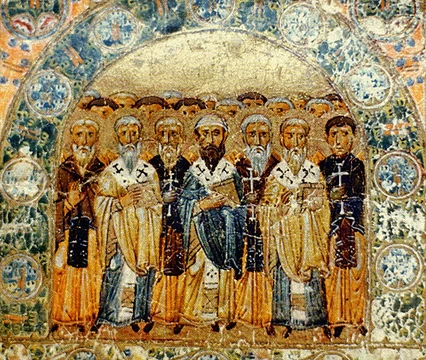
Gregory of Nyssa
Cappadocian Father who opposed slavery and shaped Trinitarian doctrine.

Gregory of Nyssa (c. 394), also known as Gregory Nyssen, was an early Christian theologian and bishop of Nyssa. He is venerated as a saint in multiple Christian traditions and is one of the Cappadocian Fathers, alongside his brother Basil of Caesarea and Gregory of Nazianzus. Though less administratively capable than his brother, Gregory made significant contributions to the doctrine of the Trinity and the Nicene Creed, and his writings were influenced by Origen. He is also notable for being the first recorded person to write against all forms of slavery, declaring the institution inherently sinful.
- died
- c. 394
- field
- Christian theology
- nationality
- Cappadocian Greek
- known_for
- Contributions to Trinitarian doctrine; first to write against all slavery; Cappadocian Father
Lore & Background
His siblings included St. Macrina the Younger, St. Basil of Caesarea, and St. Peter of Sebaste. He was educated at home by his mother and sister, and later studied in Caesarea, reading classical literature, philosophy, and perhaps medicine. He initially worked as a rhetorician and married a woman named Theosebia, who may be identified with a deaconess. He regained his see in 378, possibly due to an amnesty under Emperor Gratian. After Basil's death, Gregory took on many of his brother's responsibilities in Pontus. He participated in the First Council of Constantinople in 381 and was sent on missions to Arabia and Jerusalem, though both were unsuccessful. He died around 394.
Reader's Guide
Gregory of Nyssa is significant as a key theologian of the Cappadocian Fathers, whose work on the Trinity and Nicene Creed helped shape orthodox Christian doctrine. His philosophical writings, influenced by Origen, have drawn increased academic interest since the mid-20th century, particularly regarding universal salvation. Gregory is also historically notable for being the first person in recorded history to write against all forms of slavery, declaring it inherently sinful. His legacy is complex: while traditionally seen as an orthodox Trinitarian, many aspects of his theology remain contentious among conservative Eastern Orthodox theologians. His life reflects the ecclesiastical and political struggles of the late 4th century, including conflicts with Arianism and internal church disputes. Despite his relative lack of administrative skill compared to his brother Basil, Gregory's intellectual contributions have ensured his lasting influence in Christian thought.
Did You Know?
- Gregory was the first person in recorded history to write against all forms of slavery, calling the institution inherently sinful.
- Gregory's family included eight siblings, among them St. Basil of Caesarea and St. Macrina the Younger.
- He participated in the First Council of Constantinople in 381 and gave a famous sermon, possibly In suam ordinationem.
Frequently Asked Questions
What are Gregory of Nyssa's theological contributions?
He played a major role in shaping Trinitarian doctrine and reinforcing the language of the Nicene Creed. His thinking was partly influenced by the earlier Alexandrian writer Origen, though he ultimately moved beyond some of Origen's more speculative ideas.
How does Gregory of Nyssa's story end?
He died around 394, and while he was less politically and administratively effective than his elder brother Basil, his written theological legacy outlasted both men and continued to influence Eastern and Western Christianity for centuries.
Why is Gregory of Nyssa important?
He is the earliest known Christian thinker to argue that enslaving another person is fundamentally incompatible with human dignity, setting him apart from virtually all of his contemporaries. His Trinitarian writings also helped cement orthodox doctrine during the fourth-century councils.
What is Gregory of Nyssa's stance on slavery?
He declared that the institution of slavery in every form is unjust and contrary to the image of God in each human being. This made him the first recorded figure in the historical record to condemn the practice outright rather than merely regulating it.
More in Early Church Fathers And Saints 1-24
Elsewhere in the Early Church Fathers And Saints universe
Spotted an error? Know more?
This is a living reference — every entry is fact-audited, and reader corrections feed straight into our audit queue. Suggest an edit · See this site's audit record