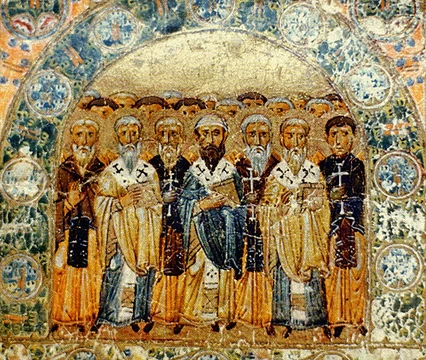
Thomas Aquinas
Italian Dominican theologian and philosopher, father of Thomism.

Maksim Sokolov (Maxergon) · CC BY-SA 4.0
Thomas Aquinas (c. 1225 – 7 March 1274) was an Italian Dominican friar and priest, theologian, and philosopher. He is considered one of the most influential thinkers in the history of Catholic theology and Western philosophy, and is the father of the school of thought known as Thomism. A proponent of natural theology, he argued that God is the source of the light of natural reason and the light of faith. He embraced several ideas put forward by Aristotle and sought to synthesize Aristotelian philosophy with the principles of Christianity. Among his best-known ideas are his Five Ways for proving the existence of God, his virtue ethics, and his sacramental theology.
- born
- c. 1225, Roccasecca, Kingdom of Sicily
- died
- 7 March 1274
- field
- Theology, philosophy
- nationality
- Italian
- known_for
- Thomism, Five Ways, Summa Theologica
Lore & Background
Thomas Aquinas was most likely born in the family castle of Roccasecca, near Aquino, c. 1225, to the powerful d'Aquino family. At age five he began education at Monte Cassino, later studying at the studium generale in Naples, where he was introduced to Aristotle, Averroes, and Maimonides. At nineteen he resolved to join the Dominican Order, but his family opposed this; his brothers seized him as he was drinking from a spring and brought him back to his parents at the castle of Monte San Giovanni Campano. Thomas was held prisoner for almost one year in the family castles at Monte San Giovanni and Roccasecca. Family members became desperate to dissuade him; at one point, two of his brothers hired a prostitute to seduce him. According to the official records for his canonization, Thomas drove her away wielding a burning log—with which he inscribed a cross onto the wall—and fell into a mystical ecstasy; two angels appeared to him as he slept and said, 'Behold, we gird thee by the command of God with the girdle of chastity, which henceforth will never be imperilled.' By 1244, seeing that all her attempts had failed, Theodora arranged for Thomas to escape at night through a window. He was sent first to Naples and then to Rome to meet Johannes von Wildeshausen, the Master General of the Dominican Order. In 1245 Thomas was sent to study at the Faculty of the Arts at the University of Paris, where he most likely met Dominican scholar Albertus Magnus. When Albertus was sent to teach at the new studium generale at Cologne in 1248, Thomas followed him. Albertus appointed the reluctant Thomas magister studentium. Because Thomas was quiet and did not speak much, some of his fellow students thought he was slow. But Albertus prophetically exclaimed: 'You call him the dumb ox, but in his teaching he will one day produce such a bellowing that it will be heard throughout the world.' Thomas taught in Cologne as an apprentice professor, writing Expositio super Isaiam ad litteram, Postilla super Ieremiam, and Postilla super Threnos. In 1252 he returned to Paris to study for a master's degree in theology. He composed a massive commentary on Peter Lombard's Sentences entitled Scriptum super libros Sententiarium, and wrote De ente et essentia for his fellow Dominicans in Paris. In 1255, along with Saint Bonaventure, he was involved in the dispute between secular masters and masters of the mendicant orders; in defense of the mendicants, he wrote the pamphlet Contra impugnantes Dei cultum et religionem. In early 1256, Thomas was appointed by direct intervention of Pope Alexander IV as regent master in theology at Paris. During his tenure from 1256 to 1259, he wrote numerous works, including Quaestiones Disputatae de Veritate, Quaestiones quodlibetales, Expositio super librum Boethii De trinitate, and Expositio super librum Boethii De hebdomadibus. By the end of his regency, Thomas was working on Summa contra Gentiles.
Reader's Guide
Thomas Aquinas's significance lies in his synthesis of Aristotelian philosophy with Christian principles, a project that shaped Catholic theology and Western philosophy for centuries. His best-known work is the unfinished Summa Theologica (1265–1274), a comprehensive guide to the theology of the Catholic Church. His body of work also includes the Disputed Questions on Truth (1256–1259), the Summa contra Gentiles (1259–1265), and numerous commentaries on Christian Scripture and on Aristotle. He is known for his Five Ways for proving God's existence, his virtue ethics, and his sacramental theology. His thought has influenced modern virtue ethics, aesthetics, and cognitive theory. He is also known for his Eucharistic hymns, which form a part of the Church's liturgy. As one of the 38 Doctors of the Church, he is known by multiple titles, including Doctor Angelicus, Doctor Communis, and Doctor Humanitatis. He has been described as 'the most influential thinker of the medieval period' and is generally considered to be one of the Catholic Church's greatest theologians and philosophers.
Did You Know?
- Thomas Aquinas was the youngest of nine children; his brothers all pursued military careers, while his family intended for him to follow his uncle into the abbacy of Monte Cassino.
- At age nineteen, Thomas resolved to join the Dominican Order, but his brothers seized him as he was drinking from a spring and held him prisoner for almost a year in family castles.
- Two of Thomas's brothers hired a prostitute to seduce him; according to canonization records, he drove her away with a burning log and fell into a mystical ecstasy.
- Albertus Magnus called Thomas 'the dumb ox' and predicted his teaching would 'produce such a bellowing that it will be heard throughout the world.'
- Thomas was appointed regent master in theology at Paris in early 1256 by direct intervention of Pope Alexander IV.
Noble Blood, Reluctant Vocation
Thomas Aquinas entered the world around 1225 at the family stronghold of Roccasecca, a castle in the Kingdom of Sicily (present-day Lazio) held by the d'Aquino line. His father, Landulf VI, served as a knight in the retinue of Emperor Frederick II, and his mother, Theodora Galluccio, traced her roots to the Caracciolo clan of Naples. As the youngest of nine siblings, Thomas was steered toward a Benedictine abbacy at Monte Cassino, following his uncle Sinibald, while his brothers were groomed for military service. At five he entered the abbey's school; by 1239, the conflict between Frederick II and Pope Gregory IX forced the family to relocate his studies to the studium generale in Naples, where he absorbed arithmetic, geometry, astronomy, music, grammar, and logic. Yet at nineteen, Thomas made a choice that shattered his family's expectations: he resolved to take the Dominican habit. His mother and brothers, determined to preserve the family's prestige, seized him on the road to Rome and held him captive for nearly a year across the castles of Monte San Giovanni and Roccasecca. They tried every tactic, even hiring a woman to tempt him into breaking his vow of celibacy. Thomas reportedly drove her off wielding a burning log and inscribed a cross onto the wall. In the end, Theodora herself arranged his midnight escape through a window, sending him first to Naples and then to Rome to meet the Dominican Master General.
The Aristotelian Synthesis
At the Naples studium, Thomas encountered the freshly translated works of Aristotle alongside the commentaries of the Andalusian thinker Averroes and the writings of Maimonides. These encounters seeded what would become his most consequential intellectual project: weaving the philosophical architecture of Aristotle into the doctrinal framework of Christianity. As a proponent of natural theology, Thomas held that God illuminates both the light of natural reason and the light of faith, making rational inquiry a legitimate path toward divine truth. Among his most celebrated contributions are the Five Ways, a set of arguments designed to demonstrate God's existence, along with a robust virtue ethics and a detailed sacramental theology. He did not merely repeat Aristotle; he selected, adapted, and harmonized Aristotelian concepts with Christian principles, creating a unified intellectual system. This synthesis, known as Thomism, became a lasting school of thought spanning both theology and philosophy. Its reach extends well beyond the medieval period, shaping modern discussions in virtue ethics, aesthetics, and cognitive theory.
A Body of Work That Outlived Its Author
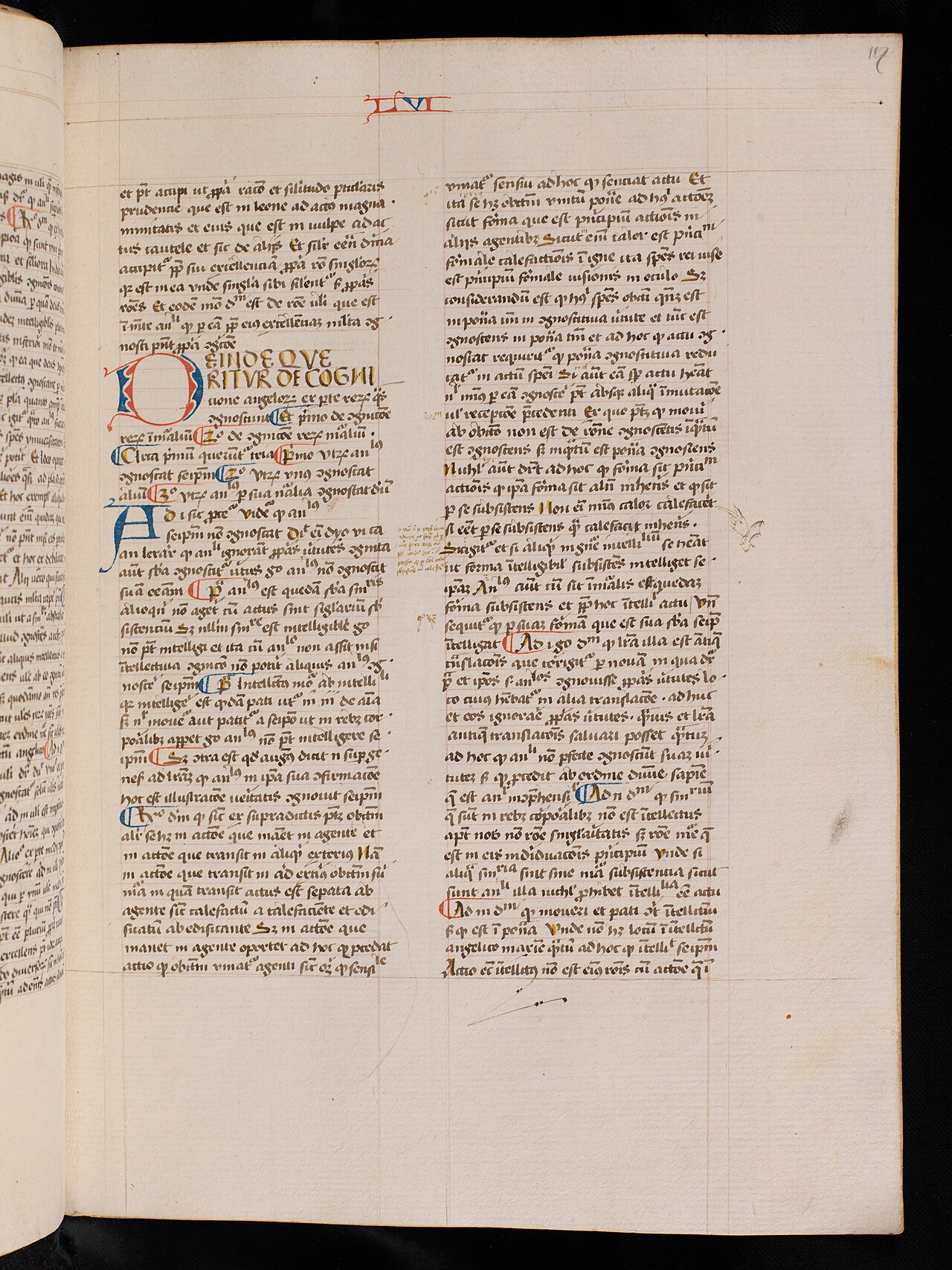
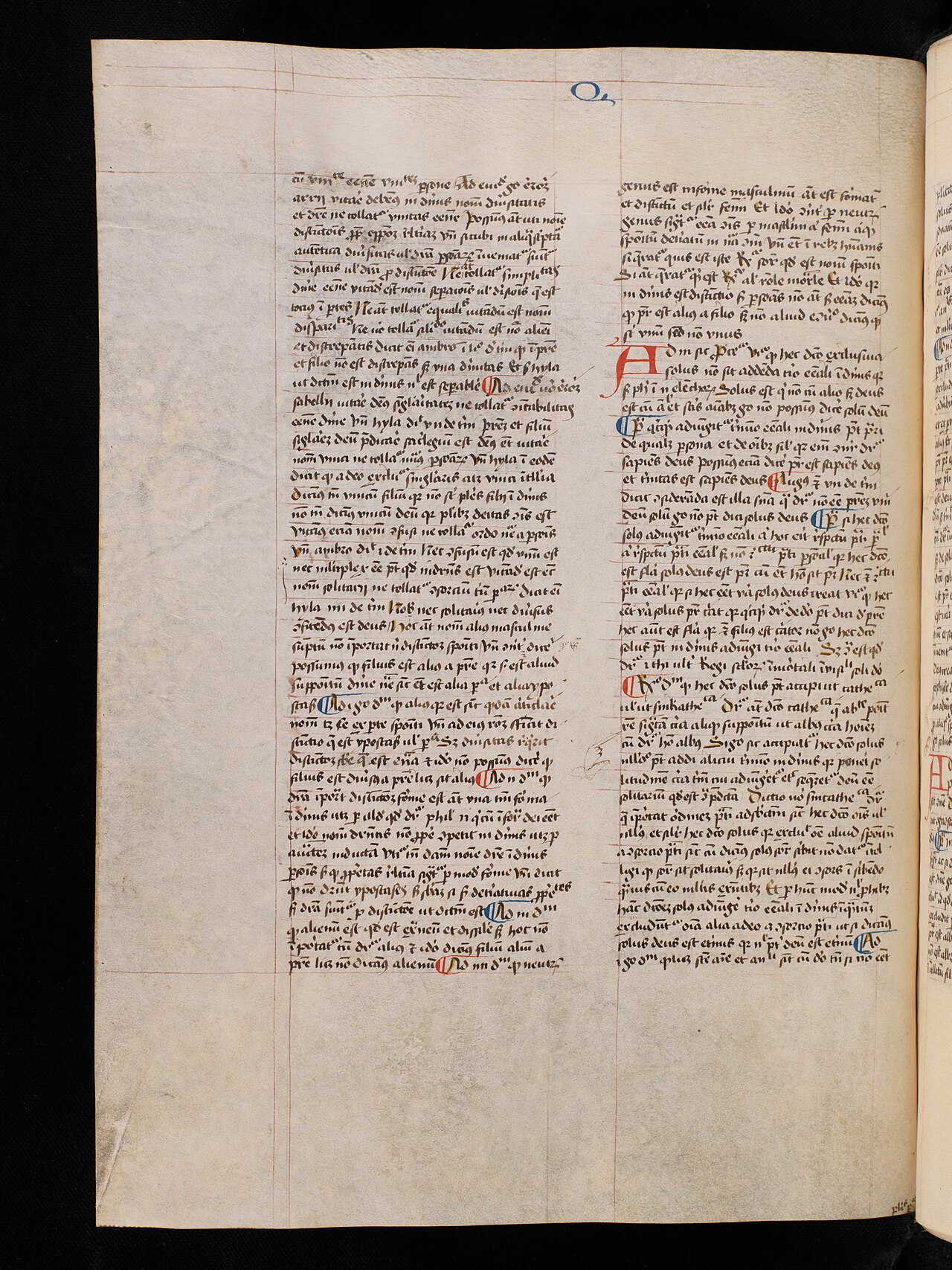
Thomas's scholarly output was both vast and ambitious. His magnum opus, the Summa Theologica, written between 1265 and his death in 1274, was intended as a comprehensive guide to Catholic theology but remained unfinished at the time of his passing. Before that, he produced the Disputed Questions on Truth (1256–1259) and the Summa contra Gentiles (1259–1265), the latter directed toward engaging audiences outside the Christian tradition. His corpus also includes numerous commentaries on both Christian Scripture and Aristotle's works, reflecting his commitment to engaging with the full range of available intellectual tradition. Beyond systematic theology, Thomas composed Eucharistic hymns that were incorporated into the Church's liturgy, giving his theological vision a devotional and musical dimension. As a Dominican friar and priest, he balanced rigorous academic work at the University of Paris and the studium at Cologne with the preaching life of his order. His mentor, Albertus Magnus, appointed him magister studentium at Cologne, a role that deepened his engagement with Aristotelian natural philosophy.
Titles, Doctrines, and a Legacy That Endures
Thomas Aquinas is widely regarded as the most influential thinker of the medieval period and stands among the Catholic Church's greatest theologians and philosophers. He holds the distinction of being one of the 38 Doctors of the Church, a designation that reflects the breadth and depth of his contributions to doctrine and thought. He is honored under several honorifics: Doctor Angelicus, evoking the mystical ecstasy and angelic visitation attributed to him during his captivity; Doctor Communis, signifying the universal applicability of his teaching; and Doctor Humanitatis, acknowledging his integration of reason and faith in understanding the human condition. The school of thought he founded, Thomism, continues to shape Catholic intellectual life and has permeated broader Western philosophy. His influence on modern virtue ethics, aesthetics, and cognitive theory demonstrates that his ideas have not remained confined to medieval scholasticism. From the unfinished pages of the Summa to the hymns sung in parish churches, Thomas's intellectual and spiritual legacy remains a living force in both academic and devotional contexts.
Gallery
Frequently Asked Questions
Who is Thomas Aquinas?
Thomas Aquinas was an Italian Dominican friar, priest, theologian, and philosopher born around 1225 in Roccasecca, in the Kingdom of Sicily. He is widely regarded as one of the most consequential thinkers in both Catholic theology and the broader Western philosophical tradition.
What are Thomas Aquinas's powers/role?
Aquinas's central contribution was weaving Christian doctrine together with Aristotelian philosophy, producing landmark works such as the Summa Theologica and his celebrated "Five Ways" arguments for God's existence. He is credited as the originator of Thomism, the philosophical and theological school that carries his name.
How does Thomas Aquinas's story end?
Aquinas died on 7 March 1274 while en route to the Second Council of Lyon. In his final days he reportedly set down his pen and told his secretary Reginald that everything he had written now seemed to him like straw.
Why is Thomas Aquinas important?
His systematic pairing of faith with reason fundamentally reshaped how Catholic theology engages with philosophy, and his influence reaches well beyond the Church into secular academic thought. The Catholic Church formally treats his writings as a foundational reference for theological education.
What is Thomism?
Thomism is the philosophical and theological tradition built around Aquinas's core ideas, especially the claim that human reason and divine revelation are mutually compatible. It remains a major framework within Catholic intellectual life and continues to shape debates in metaphysics, ethics, and natural-law theory.
More in Early Church Fathers And Saints 25-30
Related in Early Church Fathers And Saints
Links follow this subject's own source article.
Elsewhere in the Early Church Fathers And Saints universe
Spotted an error? Know more?
This is a living reference — every entry is fact-audited, and reader corrections feed straight into our audit queue. Suggest an edit · See this site's audit record