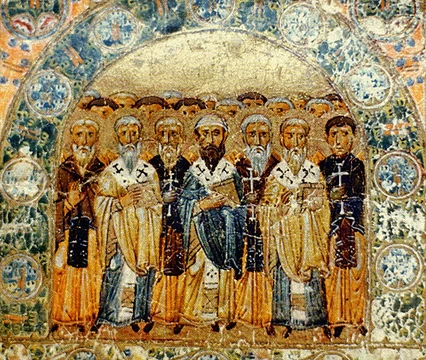
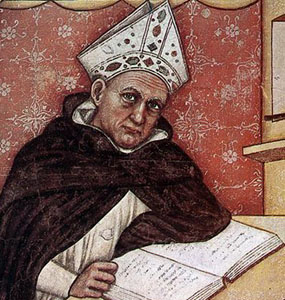
Albertus Magnus
Medieval philosopher, theologian, and natural scientist.

joergens.mi · CC BY-SA 3.0
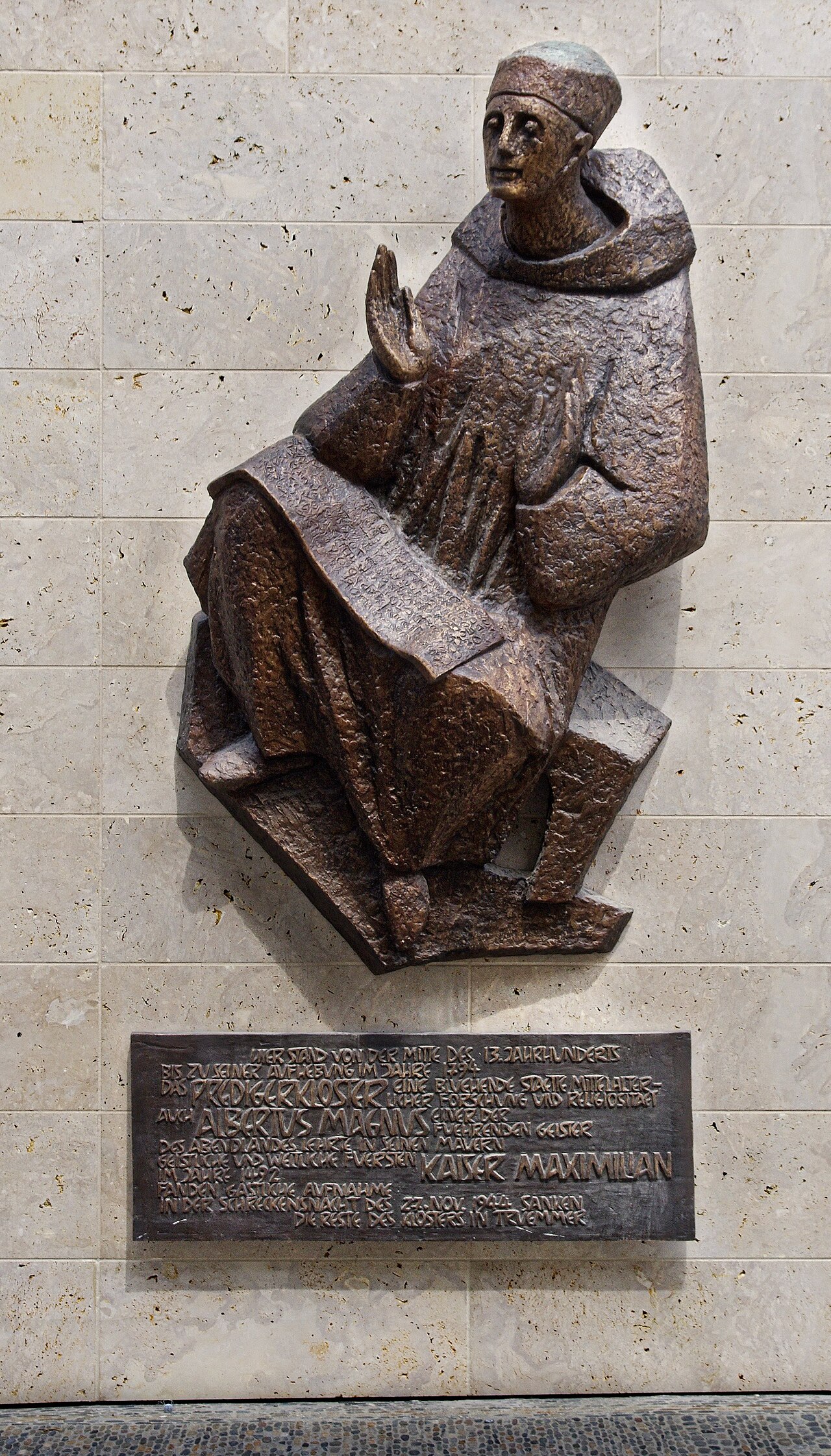
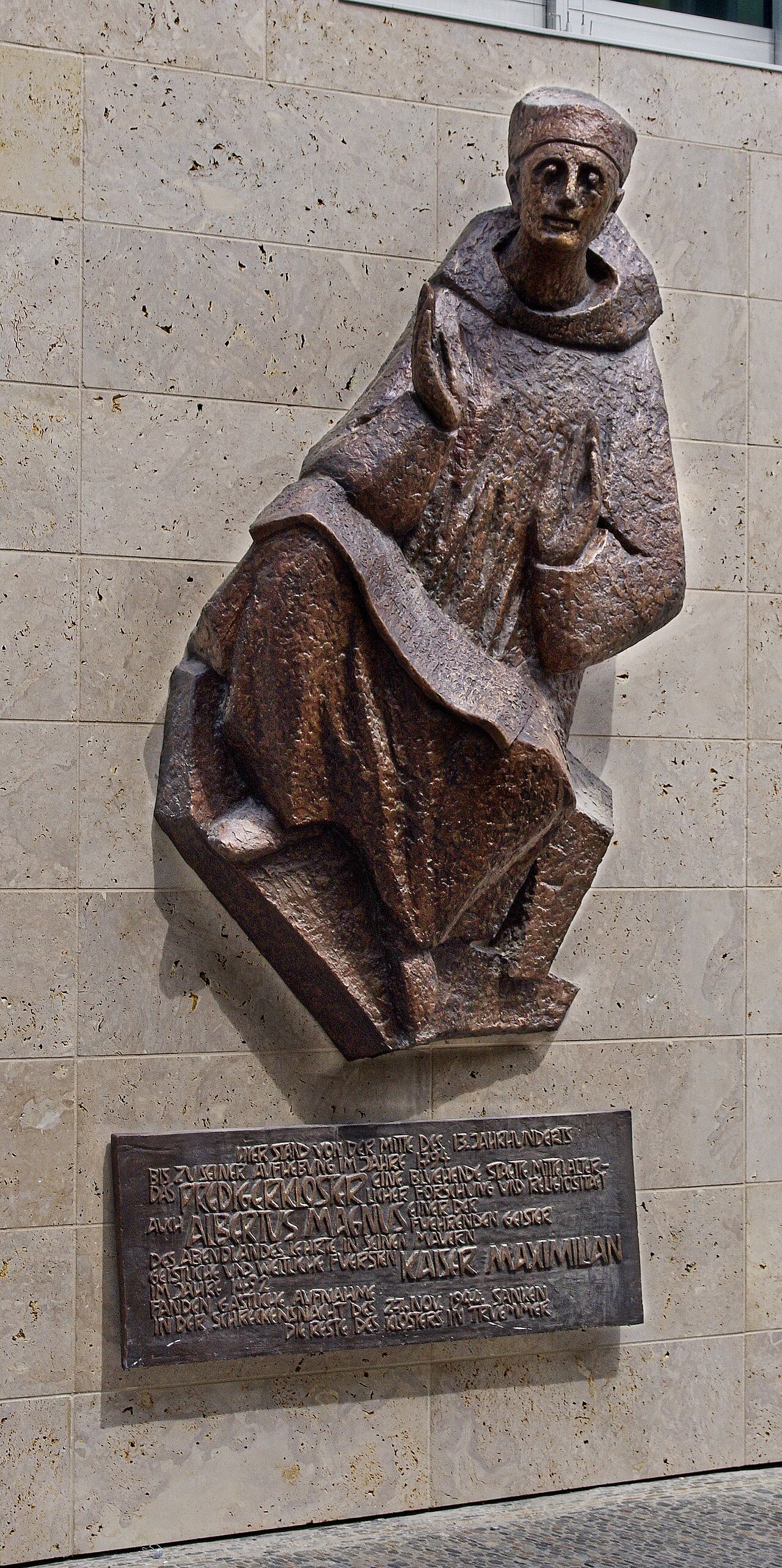
Albertus Magnus (c. He is considered one of the greatest medieval philosophers and thinkers, known during his lifetime as Doctor universalis and Doctor expertus. The Catholic Church distinguishes him as one of the Doctors of the Church.
- field
- Philosophy, theology, natural science
- nationality
- German
- known_for
- Commenting on virtually all of Aristotle's writings; introducing Aristotle to academic debate; encyclopedic works in logic, theology, botany, zoology, mineralogy, and other sciences
Lore & Background
Albertus Magnus was probably born in Lauingen (now in Bavaria) and likely educated at the University of Padua, where he studied Aristotle's writings. He taught at Cologne, Regensburg, Freiburg, Strasbourg, and Hildesheim. Albert was the first to comment on virtually all of Aristotle's writings, making them accessible to wider academic debate. He also studied and commented on the teachings of Muslim academics Avicenna and Averroes. He digested and systematized Aristotle's works in accordance with Church doctrine. His empirical investigations advanced special sciences such as embryology and mineralogy, for which he was called Doctor Universalis.
Reader's Guide
Albertus Magnus's significance lies in his role as a pivotal figure in medieval thought, bridging Aristotelian philosophy with Christian theology. He was the first to comment on virtually all of Aristotle's writings, making them accessible to wider academic debate and integrating them into the curriculum of Dominican schools. His encyclopedic works, spanning logic, theology, natural sciences, and more, demonstrated a remarkably modern empirical approach, as seen in his systematic study of minerals and his identification of organs within eggs in embryology. By digesting and interpreting Aristotle's works along with the commentaries of Muslim scholars Avicenna and Averroes, Albert helped preserve and present most modern knowledge of Aristotle.
Did You Know?
- Albertus Magnus was known during his lifetime as Doctor universalis and Doctor expertus.
- He was the first German Dominican to become master of theology at the University of Paris.
A Tangle of Identities
The dossier surrounding this saint has long baffled scholars. Multiple versions of his Passio and Vita exist, and they largely disregard the limited but reliable information preserved in liturgical records. The stories carry an unmistakably stereotypical and legendary quality, making it extraordinarily difficult to pin down who this figure actually was. Recent scholarship proposes he may be a fusion of two distinct persons: an early Christian martyr from the Lazio region and a Lombard-era bishop of Trani. Complicating matters further, during the ninth and tenth centuries his cult became entangled with that of Andrew Stratelates, an Eastern military saint accompanied by 2,597 fellow warriors from Cilicia. This interaction eventually spawned a third composite figure—the supposed martyr Magnus of Cappadocia from Caesarea—whose deeds survive in manuscripts no older than the thirteenth century. The Bollandist Willem Cuypers in the eighteenth century treated these as separate individuals, while nineteenth-century historians offered competing explanations ranging from a simple scribal comma creating a duplicate to a deliberate fabrication by careless martyrologists.
Politics of the Shrine
The veneration of this saint was never purely devotional; it was deeply entangled with the power struggles of medieval and early modern Italy. Bishop Peter of Anagni, who drove the rediscovery and promotion of the cult in the eleventh century, was himself soon canonized, and his work formed part of the broader Gregorian programme to consolidate the Papal State and elevate the noble families tied to it. The Investiture Controversy's political turbulence likely touched the saint's figure as well, possibly accounting for the appearance of a second set of bodily relics attributed to him in Rome during that era. Centuries later, around 1600, renewed veneration in Rome aligned with Tridentine efforts to centralize papal authority and reinforce the episcopal hierarchy. As the cultural historian Peter Burke observed, the expansion of hagiography in this Baroque period reflected shifting power dynamics across early modern Europe. Meanwhile, the Bollandists' critical scholarship emerged in the same climate, attempting to untangle overlapping saintly traditions as demands for historical legitimacy grew.
From Anagni to Louisville
The saint's veneration has traveled far beyond his Italian roots. Since 1901, Catholics in Louisville, Kentucky, have honored him after a collection of relics—including a skull—was sent from Anagni to the St. Martin of Tours Catholic Church there. In Rome, he is associated with the church of Santi Michele e Magno, commonly called the Church of the Frisians, where a skull and an arm were transferred to St. Peter's Basilica. In the twentieth century, he was formally recognized as patron of that Roman church, making it a liturgical center for Dutch Catholics living in Italy. After the Napoleonic upheavals, wherever his cult persisted, it increasingly served as a marker of local patriotism, intertwined with the emergence of the Italian nation-state. His feast on August 19 is observed in Anagni and numerous other communities, though the Roman Martyrology's 2001 revised edition classifies him merely as a martyr from Lazio, with the explicit caveat that details of his actual life remain uncertain.
The Athlete of Christ
The twelfth-century tradition surrounding this saint deliberately casts him as an athleta Christi, a champion of Christ. This framing does more than reiterate his classical role as a thaumaturgus or a monastic warrior battling the devil; it draws a pointed parallel with the crusading ideals of his contemporaries. The Cappadocian layer of his legend, which absorbed motifs from the Passion of Andrew the Tribune—including the number of companions—and from that of Saint Mammes of Caesarea, adds vivid narrative elements: a youth working as a shepherd, taming lions, surviving flames, and specific names of persecutors. The Anagni Cathedral, which from the late eleventh century claimed his episcopal legacy almost exclusively, houses a thirteenth-century crypt in the Cattedrale di Santa Maria Annunziata dedicated to him. Its frescoes depict scenes from his life, death, and afterlife, and his shrine is symbolically rendered as the Ark of the Covenant, elevating his relics to the status of sacred covenant.
Gallery
Frequently Asked Questions
What is Albertus Magnus's main intellectual contribution?
He produced commentaries on virtually every surviving work of Aristotle and is credited with bringing Aristotelian philosophy into the core curriculum of European universities. His own writings cover logic, theology, botany, zoology, mineralogy, and other scientific fields.
What titles or honors did the Church give Albertus Magnus?
During his lifetime he earned the nicknames Doctor universalis and Doctor expertus, reflecting the sheer range and depth of his scholarship. The Catholic Church later elevated him to the rank of Doctor of the Church.
Why is Albertus Magnus important to medieval academia?
By integrating Aristotle's natural philosophy into Christian theological education, he reshaped how medieval universities approached both science and faith. His encyclopedic output made him a foundational reference for generations of scholars.
More in Early Church Fathers And Saints 1-24
Elsewhere in the Early Church Fathers And Saints universe
Spotted an error? Know more?
This is a living reference — every entry is fact-audited, and reader corrections feed straight into our audit queue. Suggest an edit · See this site's audit record