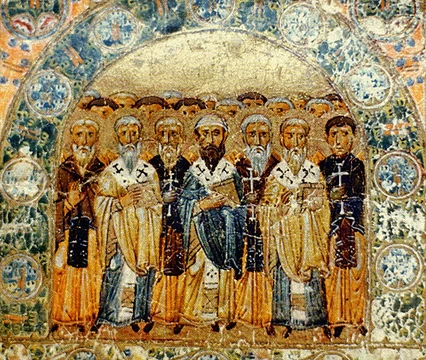
Alphonsus Liguori
Italian Catholic bishop, saint, and founder of the Redemptorists.

Livioandronico2013 · CC BY-SA 4.0
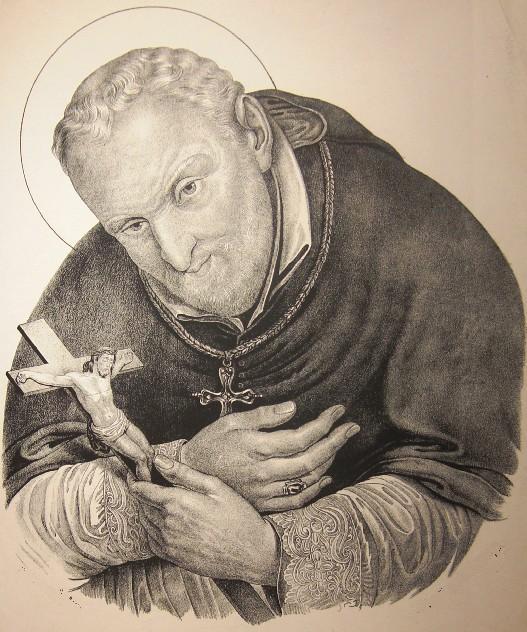
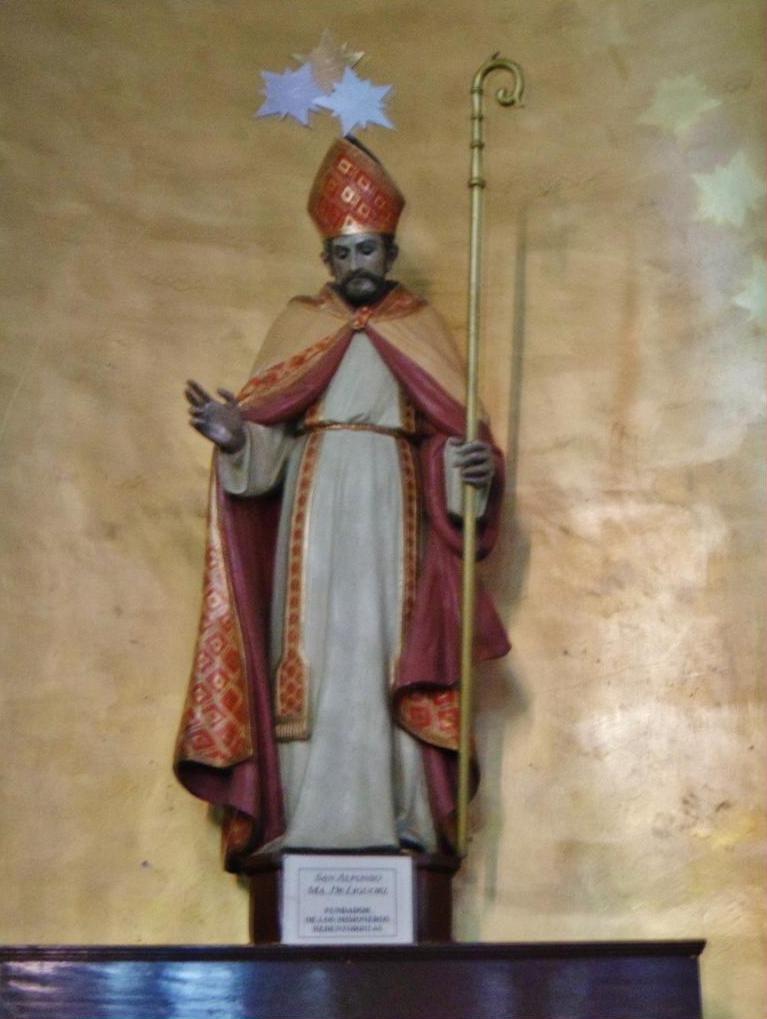
Alphonsus Maria de Liguori (27 September 1696 – 1 August 1787) was an Italian Catholic bishop and saint, as well as a spiritual writer, composer, musician, artist, poet, lawyer, scholastic philosopher, and theologian. He founded the Congregation of the Most Holy Redeemer, known as the Redemptorists, in November 1732. A prolific writer, he published nine editions of his Moral Theology in his lifetime, in addition to other devotional and ascetic works and letters. Among his best known works are The Glories of Mary and The Way of the Cross, the latter still used in parishes during Lenten devotions. He was canonised in 1839 by Pope Gregory XVI and proclaimed a Doctor of the Church by Pope Pius XII in 1871.
- known_for
- Founding the Redemptorists, writing Moral Theology, The Glories of Mary, and the
Verified Timeline
Lore & Background
Alphonsus was born in Marianella, near Naples, on 27 September 1696, the eldest of seven children of Giuseppe Liguori, a naval officer and Captain of the Royal Galleys, and Anna Maria Caterina Cavalieri. Two days after birth, he was baptised at the Church of Our Lady the Virgin as Alphonsus Mary Anthony John Cosmas Damian Michael Gaspard de' Liguori. He learned to ride and fence but was never a good shot because of poor eyesight; myopia and chronic asthma precluded a military career. His father had him educated in the legal profession, and he graduated with a doctorate in civil and canon law at 16—so small that he was almost buried in his doctor's gown and all the spectators laughed. At 18, he joined the Confraternity of Our Lady of Mercy, assisting in the care of the sick at the hospital for 'incurables'. After losing an important case at 27—the first he had lost in eight years—he resolved to leave the law, reporting an 'interior voice' saying: 'Leave the world, and give yourself to me.' In 1723, he offered himself as a novice to the Oratory of St. Philip Neri, but after two months, he and his father compromised: he would study for the priesthood but live at home. He was ordained on 21 December 1726 at age 30. He lived his first years as a priest with the homeless and marginalised youth of Naples, founding the Evening Chapels, which were managed by the young people themselves; at his death, there were 72 chapels with over 10,000 active participants. In 1731, while ministering to earthquake victims in Foggia, he said he had a vision of the Virgin Mother as a girl of 13 or 14 wearing a white veil. On 9 November 1732, he founded the Congregation of the Most Holy Redeemer after Sister Maria Celeste Crostarosa told him it had been revealed that he was chosen by God. A gifted musician, he wrote the Italian carol 'Tu scendi dalle stelle' in 1732, based on his original Neapolitan song 'Quanno nascette Ninno', which became known as the 'Carol of the Bagpipers'.
Reader's Guide
Alphonsus Liguori's greatest contribution to the Catholic Church was in moral theology. His masterpiece, The Moral Theology (1748), was approved by the Pope himself and born of his pastoral experience. He opposed sterile legalism and strict rigourism, saying 'such rigour has never been taught nor practised by the Church.' His system is noted for prudence, avoiding both laxism and excessive rigour, and he is credited with the position of Aequiprobabilism. He published nine editions of his Moral Theology in his lifetime. Appointed Bishop of Sant'Agata dei Goti in 1762, he tried to refuse using his age and infirmities. He addressed ecclesiastical abuses, reformed the seminary, suspended priests who celebrated Mass in less than 15 minutes, and sold his carriage and episcopal ring to give money to the poor. By May 1775, he was 'deaf, blind, and laden with so many infirmities, that he has no longer even the appearance of a man'; his resignation was accepted by Pope Pius VI. He died on 1 August 1787 in Pagani, where his remains are displayed in the parochial church. He was beatified on 15 September 1816 by Pope Pius VII and canonised on 26 May 1839 by Pope Gregory XVI. In 1949, the Redemptorists founded the Alphonsian Academy for the advanced study of Catholic moral theology. He was named patron of confessors and moral theologians on 26 April 1950 by Pope Pius XII, who wrote of him in the encyclical Haurietis aquas. The church bestowed the title 'Prince of Moral Theologians' and granted the unprecedented honour in a Decree of 22 July 1831 allowing confessors to follow any of St. Alphonsus's own opinions without weighing the reasons on which they were based.
Did You Know?
- Alphonsus was baptised with the full name Alphonsus Mary Anthony John Cosmas Damian Michael Gaspard de' Liguori.
- He earned a doctorate in civil and canon law at age 16 and was so small he was almost buried in his doctor's gown, making the spectators laugh.
- He wrote the Christmas carol 'Tu scendi dalle stelle' in 1732, originally in Neapolitan as 'Quanno nascette Ninno', and it became known as the 'Carol of the Bagpipers'.
- As bishop, he suspended priests who celebrated Mass in less than 15 minutes and sold his carriage and episcopal ring to give money to the poor.
- A Decree of 22 July 1831 allowed confessors to follow any of St. Alphonsus's opinions without weighing the reasons on which they were based.
Architectural Vision and Construction
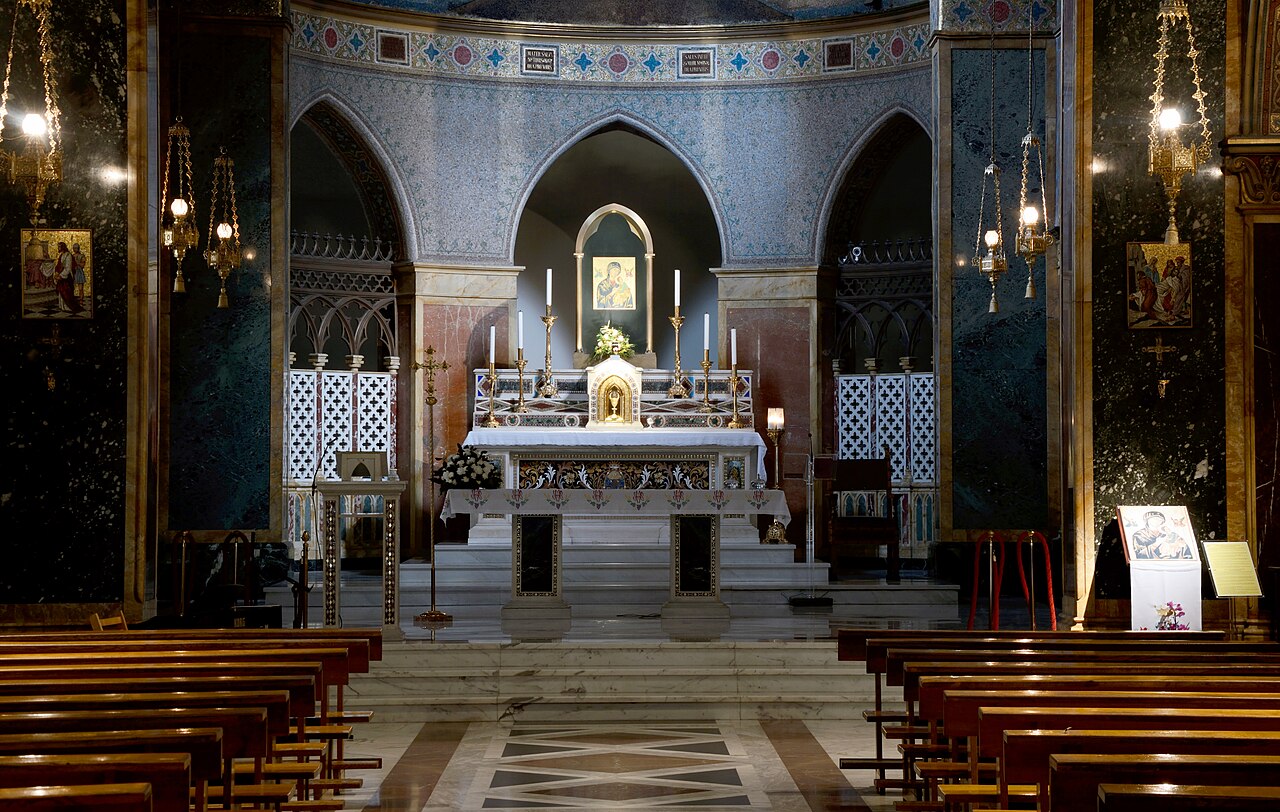
The church complex in Baltimore, Maryland, stands as a testament to Gothic Revival ambition in mid-nineteenth-century America. The main church is constructed of red brick with limestone accents, and its nave soars to fifty feet. The most striking vertical element is the ornate steeple, which climbs two hundred and ten feet above a three-level bell tower, crowned by a twelve-foot gold cross. The adjacent three-story convent and four-story rectory take a simpler Georgian townhouse form, also in brick, completing a cohesive yet varied campus that has anchored the neighborhood for nearly two centuries.
Redemptorist Roots and Early Pastoral Ministry
The parish traces its pastoral origins to the Redemptorist Fathers, who came to Baltimore to minister to the growing German immigrant community. The complex was overseen by these fathers from its founding until 1917. Both men would later receive formal recognition from the Church: Neumann was canonized on June 19, 1977, and Seelos was beatified on April 9, 2000.
Shifting Communities and Enduring Devotional Life
The demographic landscape surrounding the church changed dramatically over the decades. By 1917, many of the German immigrants who had originally formed the parish's congregation had relocated to other neighborhoods, and St. Alphonsus transitioned to serving the Lithuanian immigrant community that had settled in the area. This shift illustrates how the parish functioned as a spiritual anchor for successive waves of newcomers seeking to preserve their cultural and religious identities in a new country. The Redemptorist Fathers, who had guided the parish since its founding, continued their stewardship through these transitions until 1917.
Historic Recognition and Contemporary Administration
In the modern era, the parish has taken on a distinctive liturgical character. Beginning in 2017, the parish came under the administration of the Priestly Fraternity of Saint Peter, a community of priests dedicated to the traditional liturgy, while remaining officially within the Archdiocese of Baltimore. This arrangement has made the shrine a notable destination for those seeking the pre-Vatican II form of worship in the American context, reinforcing its identity as a place where historical continuity and active parish life coexist in a single, architecturally distinguished setting.
Gallery
Frequently Asked Questions
Who is Alphonsus Liguori?
He was an 18th-century Italian bishop, theologian, and saint (1696–1787) best remembered for founding the Redemptorist religious order. He also served as a prolific writer on moral theology and popular devotion.
What did Alphonsus Liguori found?
He established the Congregation of the Most Holy Redeemer, commonly called the Redemptorists, a religious order focused on evangelizing the poor and underserved communities.
What are Alphonsus Liguori's most well-known writings?
His major works include treatises on moral theology, a devotional text titled *The Glories of Mary*, and a body of spiritual meditations. His theological contributions earned him the title Doctor of the Church.
Why is Alphonsus Liguori considered important in Catholic history?
He shifted the practice of moral theology toward greater pastoral compassion, moving away from overly rigid casuistry that had dominated earlier centuries. His influence on priestly formation and lay devotion persisted well beyond his lifetime.
Did Alphonsus Liguori compose music?
Yes, he wrote the Italian Christmas carol *Tu scendi dalle stelle* (You Descend from the Stars), which is still widely sung in Italian-speaking parishes during the Nativity season.
More in Early Church Fathers And Saints 1-24
Related in Early Church Fathers And Saints
Links follow this subject's own source article.
Elsewhere in the Early Church Fathers And Saints universe
Spotted an error? Know more?
This is a living reference — every entry is fact-audited, and reader corrections feed straight into our audit queue. Suggest an edit · See this site's audit record