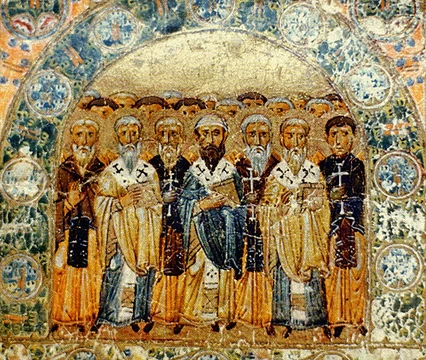
Anthony of Padua
Portuguese Franciscan preacher and teacher.

Antoloji · CC BY-SA 4.0
Anthony of Padua, also known as Anthony of Lisbon, was a Portuguese Catholic priest and a member of the Order of Friars Minor.
- field
- Catholic priest, Franciscan friar
- nationality
- Portuguese
- known_for
- Preaching, teaching, and the traditional practice of praying for his help in finding lost or stolen things
Lore & Background
Anthony was born Fernando Martins de Bulhões in Lisbon, Portugal. While 15th-century writers state that his parents were Vicente Martins and Teresa Pais Taveira, and that his father was the brother of Pedro Martins de Bulhões, Niccolò Dal-Gal views this as less certain. At age 15, he was received into the Canons Regular of the Order of the Holy Cross at the Abbey of Saint Vincent. After ordination, he was named guestmaster at age 19. Inspired by five Franciscans beheaded in Morocco, he obtained permission to join the Franciscan order, adopting the name Anthony from a chapel dedicated to Anthony the Great. He set out for Morocco but fell seriously ill and was forced to return; his ship landed in Sicily. He eventually was assigned to the rural hermitage of Montepaolo di Dovadola near Forlì.
Reader's Guide
Anthony's significance lies in his role as a preacher and teacher within the early Franciscan order. This led to his being sent to the Franciscan province of Romagna. Anthony also taught at universities such as Montpellier and Toulouse, but preaching was considered his supreme gift. He was appointed Provincial superior of northern Italy and chose Padua as his location.
Did You Know?
- Anthony was born Fernando Martins de Bulhões in Lisbon, Portugal.
- He adopted the name Anthony from a chapel dedicated to Anthony the Great.
- The traditional practice of praying for St. Anthony's help in finding lost or stolen things is traced to an incident in Bologna involving a stolen psalter.
- When his body was exhumed 30 years after his death, his tongue was observed to have glistened and looked as if it were still part of a live body.
From Noble Lisbon to the Franciscan Path
Born Fernando Martins de Bulhões on 15 August 1195 in Lisbon, the young man came from a wealthy Portuguese noble family. His parents arranged his education at the cathedral school, and by fifteen he had entered the Canons Regular at the Abbey of Saint Vincent. In 1212, weary of constant family visitors, he transferred to the motherhouse in Coimbra to study theology and Latin. By nineteen he served as guestmaster, overseeing the abbey's hospitality.
The turning point arrived when Friars Minor established a hermitage outside Coimbra, dedicated to St. Anthony the Great. Their simple evangelical lifestyle captivated Fernando. When word spread that five Franciscans had been beheaded in Morocco and King Afonso II ransomed their bodies for martyr's burial, his resolve hardened. He secured permission to leave the Canons Regular and joined the Franciscan order at Olivais, taking the name Anthony after the chapel there. His plan to head to Morocco collapsed when illness struck; a storm drove his ship to Sicily, and from there he wandered into Tuscany. In poor health, he was assigned to the hermitage of Montepaolo di Dovadola near Forlì, where he retreated into a cave cell for prayer and study.
The Forlì Sermon and a Preacher's Emergence
In 1222, a misunderstanding at an ordination in Forlì changed Anthony's trajectory. Visiting Dominican friars had expected a Franciscan to preach; the Franciscans had assumed a Dominican would take the pulpit. With no one prepared, the hermitage superior turned to Anthony, whom he suspected was the most qualified among his humble brothers. Anthony objected, but was overruled and told to speak whatever the Holy Spirit might inspire. His impromptu sermon stunned the audience, moved by his rich voice, arresting delivery, deep scriptural knowledge, and eloquence.
The minister provincial, Brother Gratian, sent him to the Franciscan province of Romagna based in Bologna. His reputation reached Francis of Assisi, who had long distrusted theological study in the order, fearing it would erode their commitment to poverty and service. In Anthony, however, Francis found a kindred spirit. In 1224 he entrusted the education of friars seeking ordination to Anthony's care. Anthony also taught at the universities of Montpellier and Toulouse, though his preaching remained his supreme gift. His method drew on allegory and symbolic explanation of scripture. By 1226, after preaching in Provence following the general chapter at Arles, he was appointed Provincial superior of northern Italy and chose Padua as his base.
The Psalter, the Thief, and a Teaching Legacy
One of the most enduring stories associated with Anthony took place in Bologna. He kept a book of psalms annotated with his own notes for teaching students. A novice who had decided to leave the order took the psalter with him. In an age before the printing press, every book was hand-copied and therefore enormously valuable; for a Franciscan bound by a vow of poverty, replacing such an item would have been nearly impossible. When Anthony realized his psalter was missing, he prayed that it would be found or returned. The thief was moved not only to bring the book back but also to rejoin the order. The stolen volume is said to be preserved in the Franciscan friary in Bologna.
This incident became the root of the widespread tradition of invoking St. Anthony's help in recovering lost or stolen things. Yet Anthony's broader legacy in education was equally significant. Francis of Assisi, who had harbored a deep suspicion that theological study might lead friars away from genuine poverty and service, recognized in Anthony a rare combination: a man who shared his vision of radical simplicity yet possessed the scholarly depth to instruct young brothers preparing for ordination.
Papal Recognition and a Quiet End
In 1228, Anthony served as an envoy from the general chapter to Pope Gregory IX. At the papal court, his preaching was hailed as a "jewel case of the Bible," and the pope commissioned him to produce a collection of sermons for feast days, known as Sermones in Festivitates. Gregory IX went so far as to describe Anthony with the title "Ark of the Testament" (Doctor Arca testamenti), a designation that underscored the depth of his scriptural mastery.
By 1231, however, Anthony's health had deteriorated. Stricken with ergotism, he withdrew to a woodland retreat at Camposampiero with two fellow friars, seeking a respite from his ailments. There, a small room was built for him beneath the branches of a walnut tree, where he spent his final days in quiet repose. He died on 13 June 1231, aged thirty-five, leaving behind a body of sermons, a reputation as a powerful preacher, and a legacy that would outlast his brief life by centuries. His name became so closely identified with the city of Padua, where he had chosen to serve as provincial superior, that he is remembered today as Anthony of Padua, even though he was born in Lisbon.
Gallery
Frequently Asked Questions
What is Anthony of Padua known for?
He is best remembered for his powerful preaching and teaching as a Franciscan friar. He is also traditionally invoked by people seeking help in locating lost or stolen items, a devotional practice that has persisted for centuries.
Why is Anthony of Padua important in Catholic tradition?
He is venerated as a saint and Doctor of the Church, celebrated for his eloquent sermons grounded in thorough biblical scholarship. His legacy endures through the widespread devotion of the faithful who continue to seek his intercession, particularly in matters of lost things.
Why is he called Anthony of Padua if he was Portuguese?
He was born in Lisbon, Portugal, but he spent his final years and died in Padua, Italy, which is why he is commonly referred to by that city name. He is also sometimes called Anthony of Lisbon to acknowledge his Portuguese origins.
More in Early Church Fathers And Saints 1-24
Elsewhere in the Early Church Fathers And Saints universe
Spotted an error? Know more?
This is a living reference — every entry is fact-audited, and reader corrections feed straight into our audit queue. Suggest an edit · See this site's audit record